Two daily start times
Munich Old Town
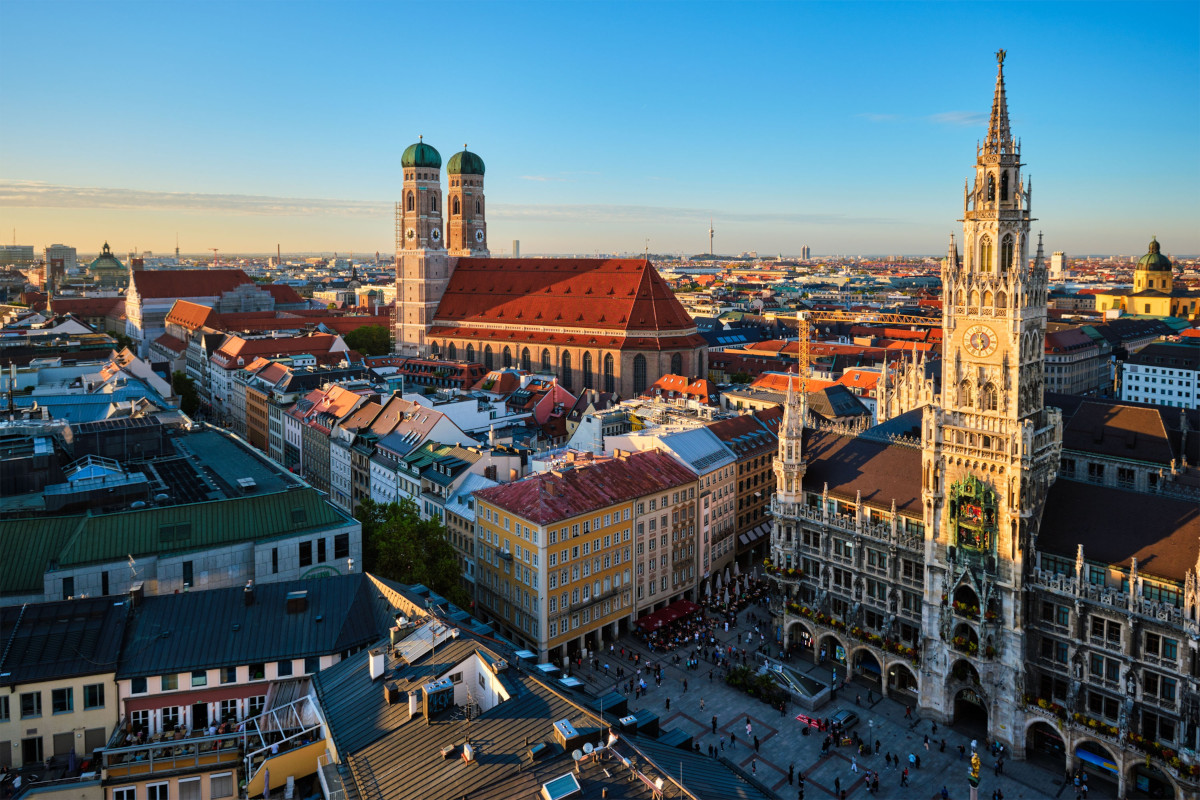
My signature Old Town tour runs twice a day — meet at 10:45 for a relaxed start before the afternoon crowds, or join the 14:15 tour and walk in softer afternoon light. Same route, same stories: from the city's oldest church to its grandest square, every stop tells a story that connects Munich's past to its vibrant present. Both tours last about 2.5 hours.
The Route
All stops on the map
Click any marker to see the stop's name and address.
Tour Stops
Each stop shows both start times — Morning 10:45 and Afternoon 14:15. Times are estimates and may vary depending on events in the city, group size, and weather conditions.
St. Peter - Founding of Munich
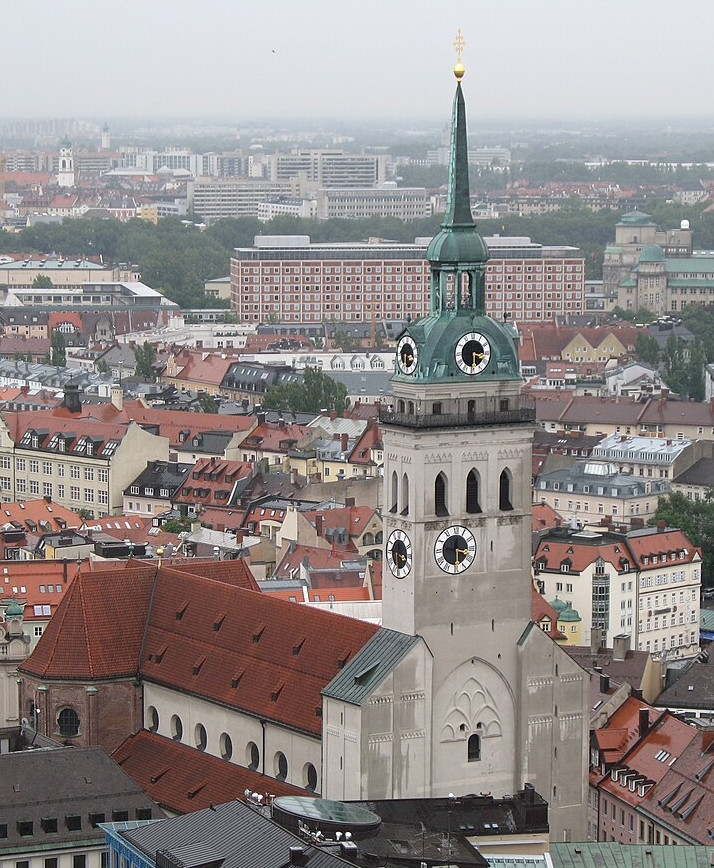
Munich was founded in 1158, when Henry the Lion built a bridge over the Isar River to control an important salt trade route. Around this bridge, a small settlement of monks and merchants began to grow — this was the origin of Munich, whose name comes from the word “monks.” Right at the center of this early settlement stands St. Peter’s Church, the oldest church in the city, often called “Alter Peter” by locals. Its history goes back to the 12th century, and it has been a spiritual and cultural landmark of Munich ever since.
Photo: Andrew Bossi, CC BY-SA 2.5, via Wikimedia Commons.
Glockenspiel - Marienplatz - New Town Hall
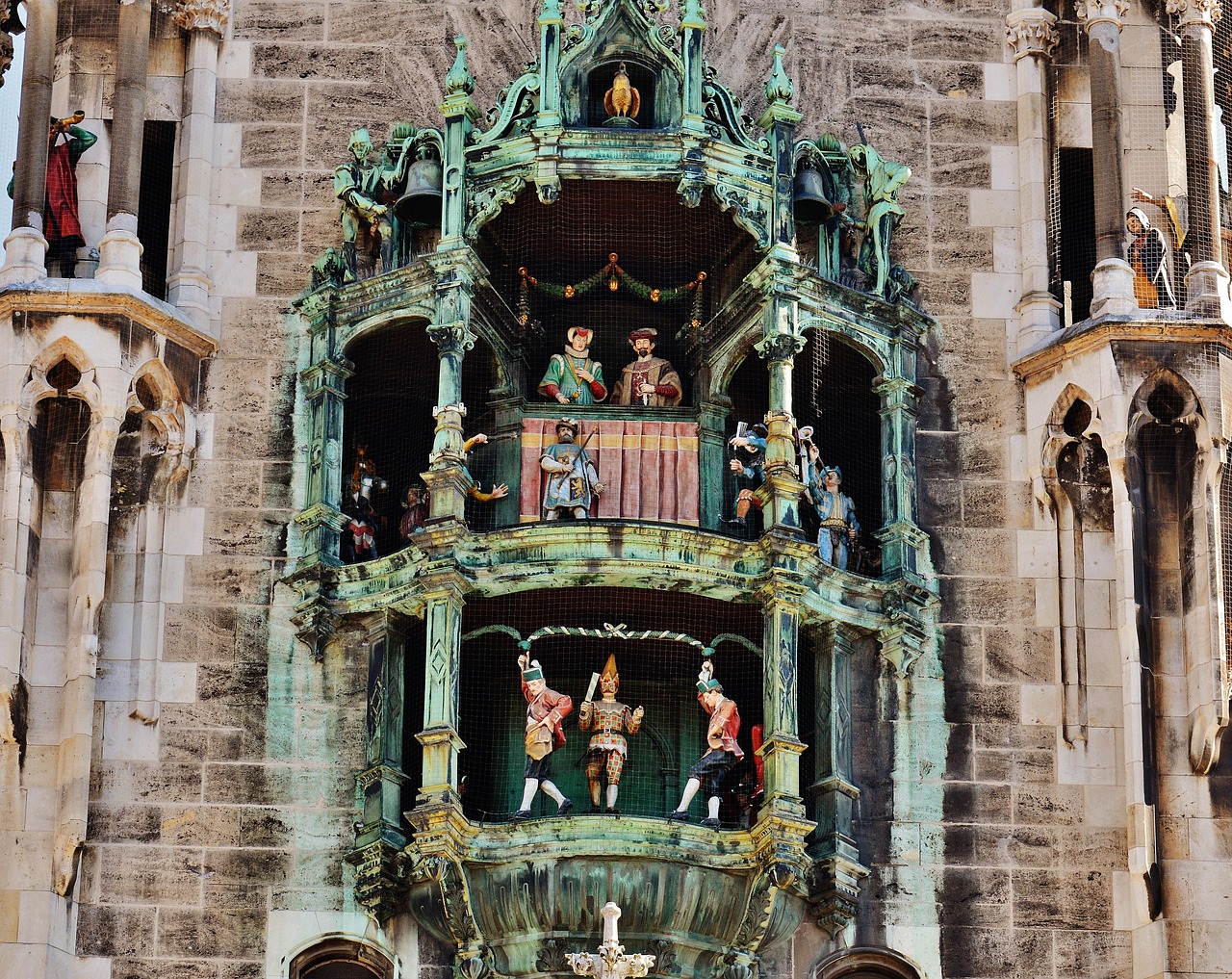
One of the highlights of our tour will be watching the famous Glockenspiel. We will see it at 11 o’clock (only at the morning tour), when the figures in the tower come to life and reenact scenes from Munich’s history, including a royal wedding and the traditional coopers’ dance. We are standing in Marienplatz, the central square of Munich and the heart of the city since its foundation in 1158. For centuries, this square has been the main marketplace and the setting for many important events. Right in front of us is the New Town Hall, a beautiful neo-Gothic building from the late 19th century. Its impressive façade and tower make it one of Munich’s most iconic landmarks — and it is home to the famous Glockenspiel we are about to watch.
Viktualienmarkt
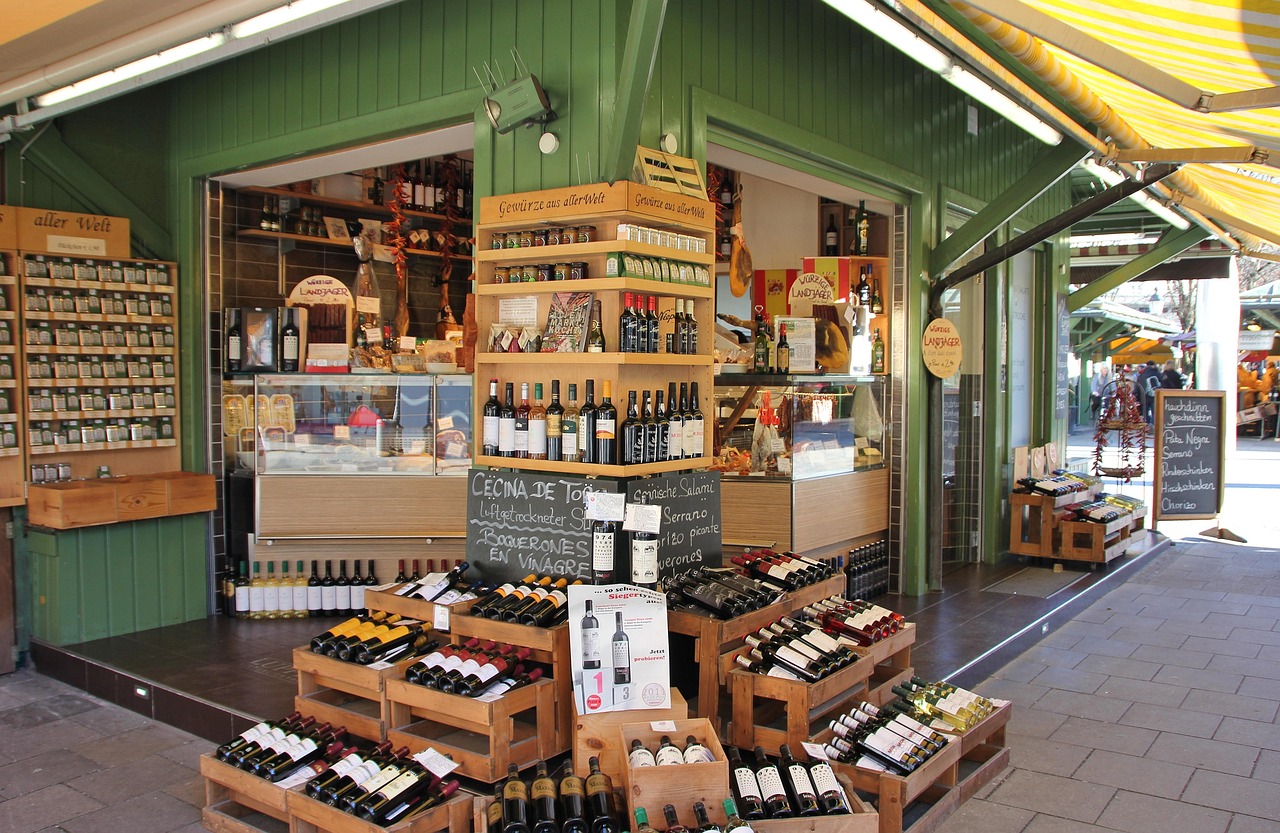
Our next stop is the Viktualienmarkt, Munich’s most famous food market. It dates back to the early 19th century, when the original market at Marienplatz became too small and was moved here in 1807. Since then, it has grown into a vibrant open-air market with dozens of stalls selling fresh produce, meats, cheeses, flowers, and local specialties. In the center of the market, you’ll find a traditional beer garden. It’s a perfect place to take a break and enjoy a drink under the chestnut trees. Like many beer gardens in Bavaria, you are even allowed to bring your own food — as long as you buy your beer here. This makes it a very relaxed and typically Bavarian experience.
Hofbräuhaus - 10 minutes break
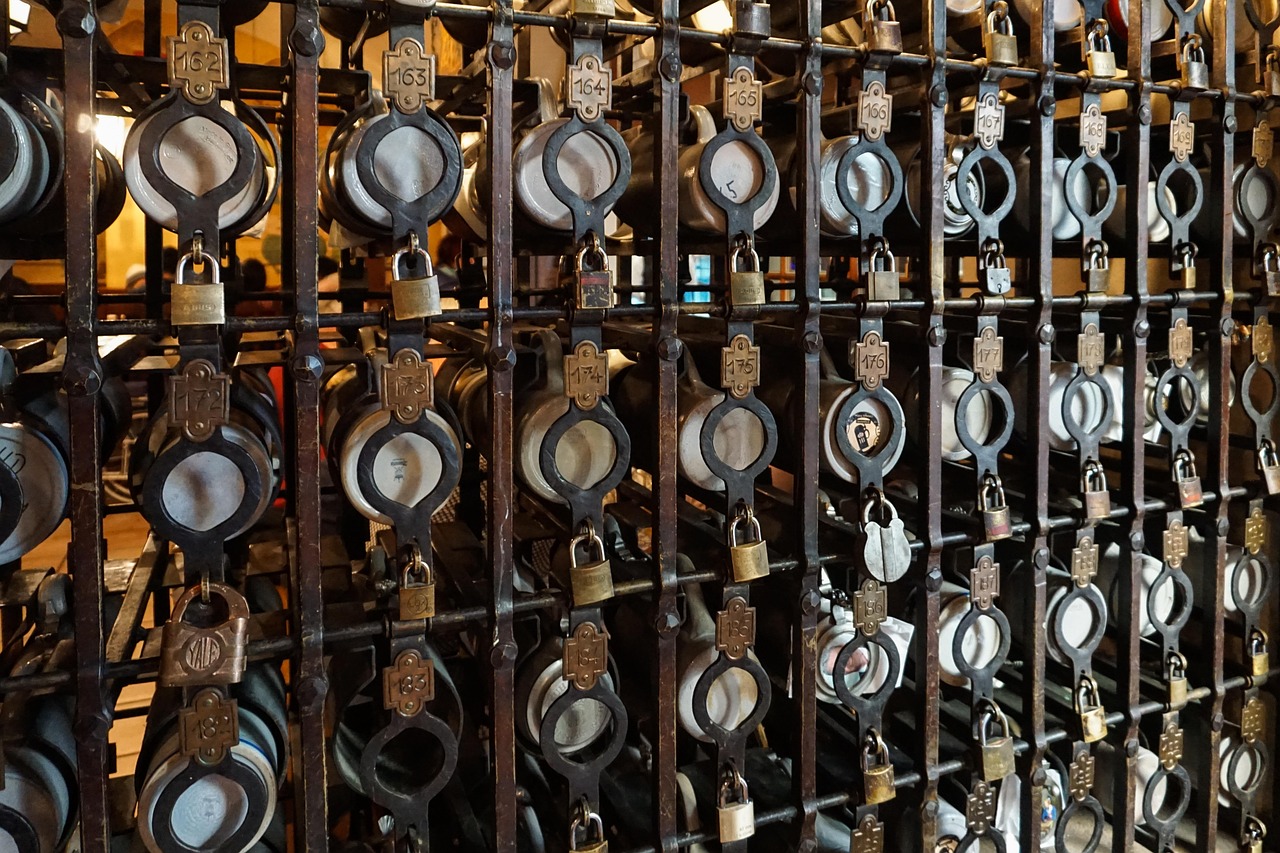
Our next stop is the famous Hofbräuhaus, one of the most well-known beer halls in the world. It was originally founded in 1589 as a brewery for the Bavarian court, to supply beer for the duke and his entourage. Over time, it became so popular that it was opened to the public, and the large beer hall we see today was created. This is where traditional Bavarian beer culture comes to life — with long wooden tables, lively music, and guests from all over the world. A special tradition here is the beer stein lockers. Some regular guests have their own personal steins, which are stored in locked cabinets in the hall. This shows how important and personal beer culture can be in Bavaria. We will take a short 10-minute break here, so you can use the restrooms and enjoy the atmosphere.
Alter Hof
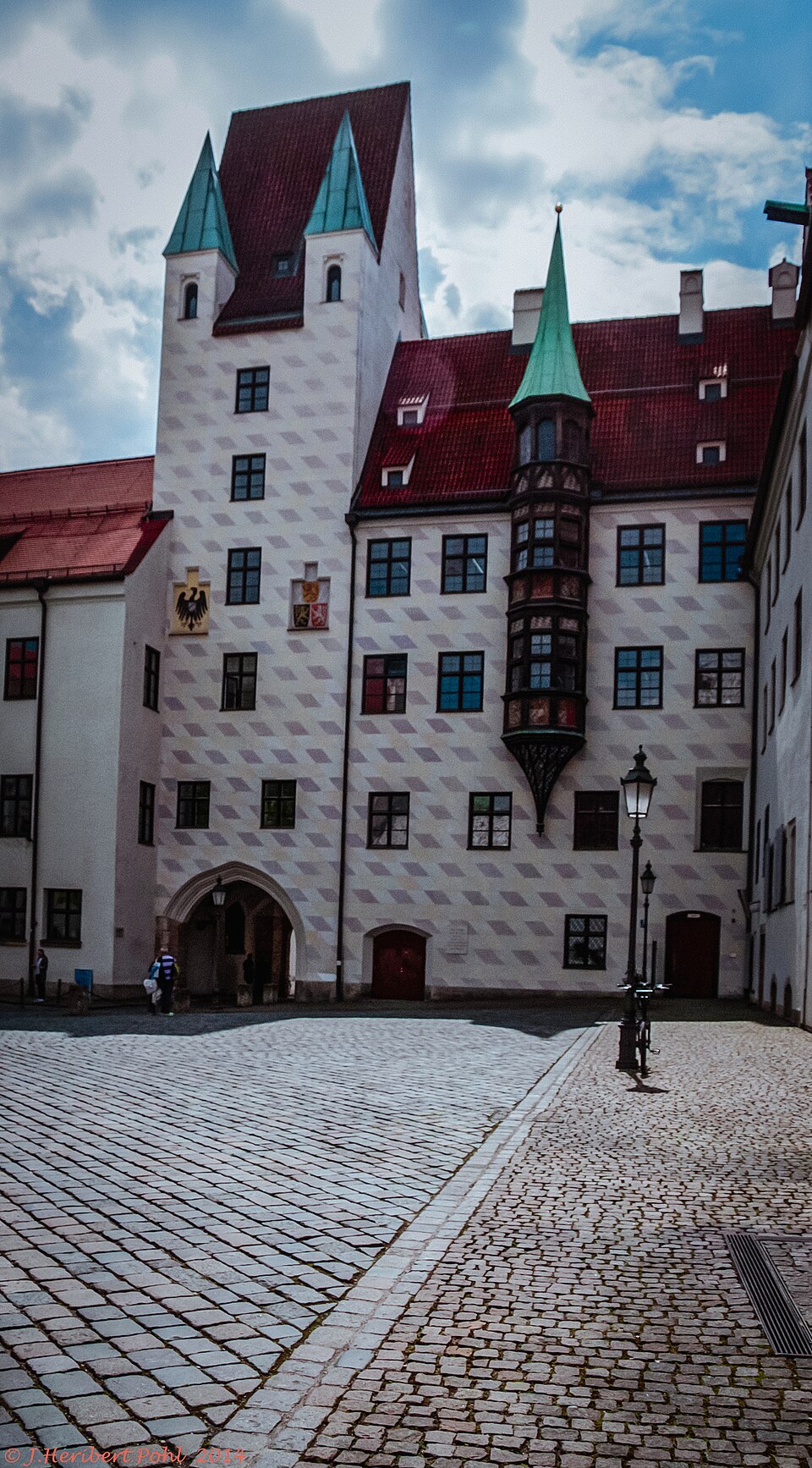
Our next stop is the Alter Hof, one of the oldest and most historically important places in Munich. In the 13th century, it served as the first residence of the Wittelsbach dynasty, the ruling family of Bavaria for many centuries. At that time, this was actually the imperial residence of the Holy Roman Emperor when he stayed in Munich, making it the city’s first royal palace. Today, the Alter Hof is a quiet courtyard complex, but it marks the place where Munich began to develop as a center of power and administration. It gives us a glimpse into the medieval origins of the city and its early importance.
Photo: Heribert Pohl, CC BY-SA 2.0, via Wikimedia Commons.
Frauenkirche
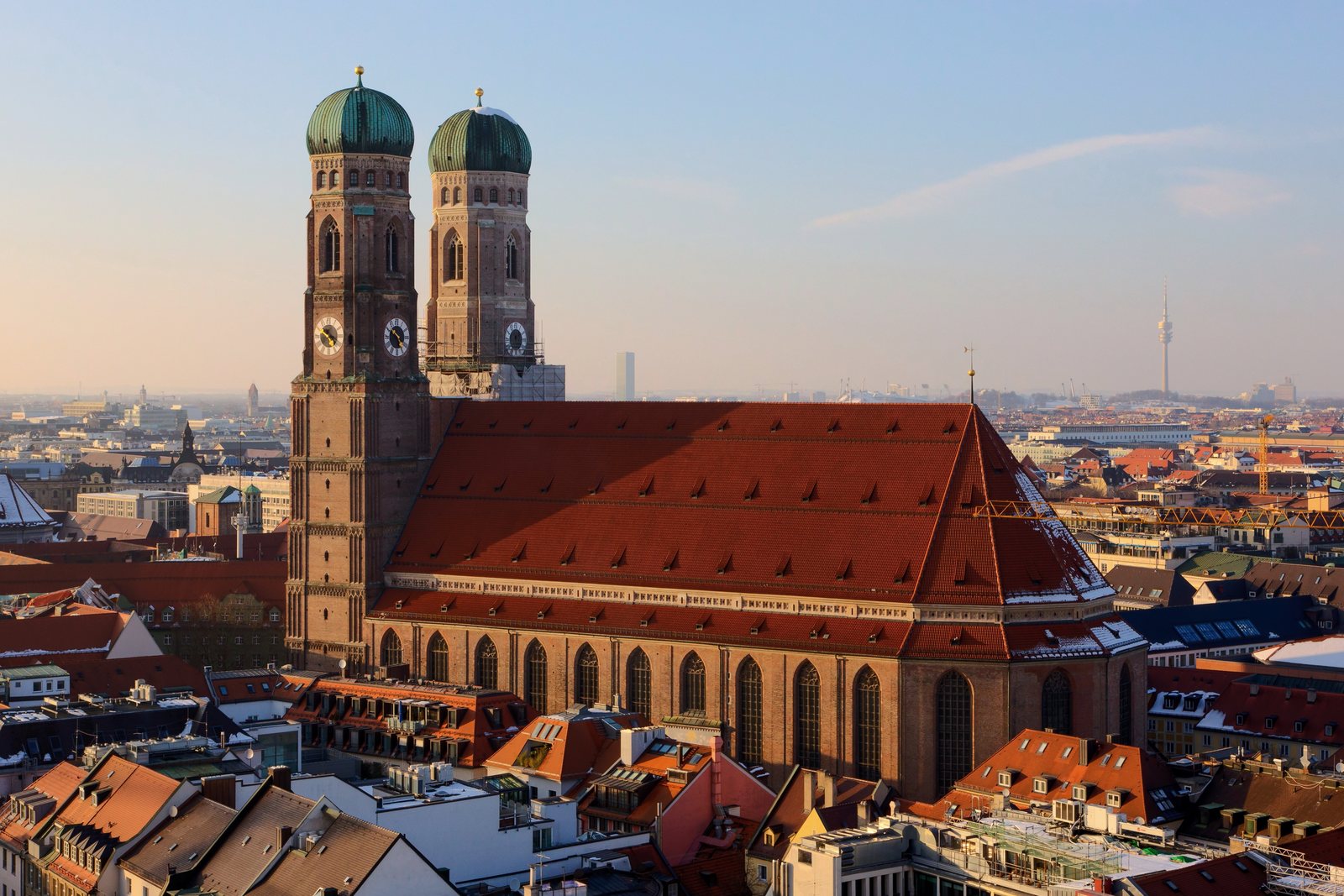
Our next stop is the Church of Our Dear Lady, known in German as the Frauenkirche. It is the most famous church in Munich and one of the city’s main landmarks, especially recognizable by its two towers with distinctive onion-shaped domes. The church was built in the 15th century and has been a symbol of Munich ever since. For a long time, its towers defined the city skyline, as no building was allowed to be taller. Inside the church, you can also find the famous “Devil’s Footprint.” I’ll tell you the story behind it during my tour. Today, the Frauenkirche is not only an important religious site, but also a symbol of Munich’s identity and history.
Residenz - Max-Joseph-Platz - National Theatre
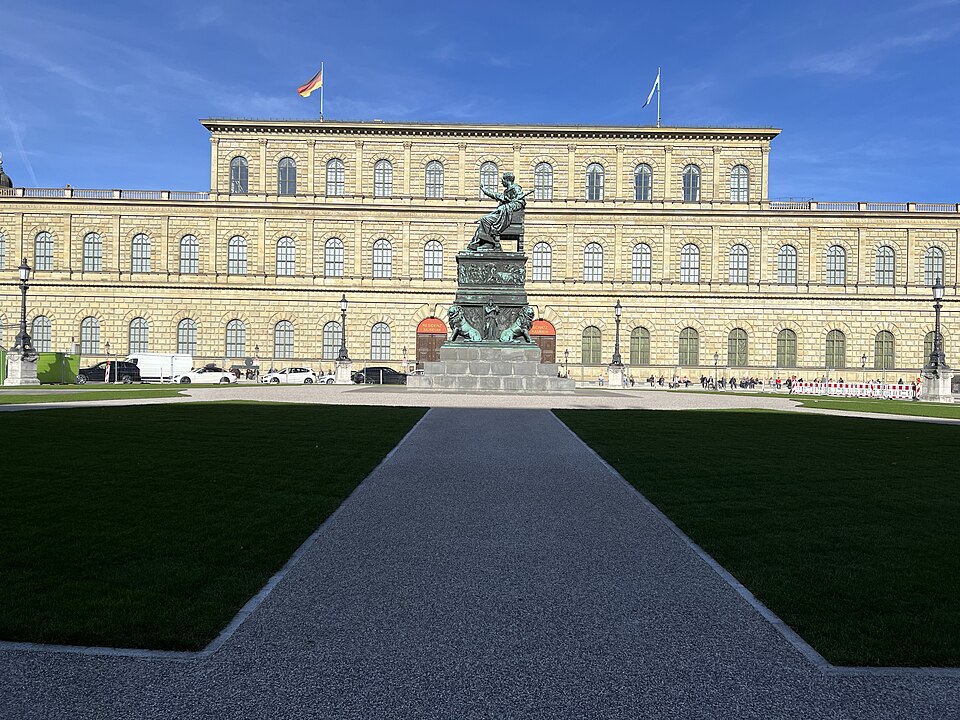
Our next stop brings us to the Munich Residenz, the former royal palace of the Wittelsbach family, who ruled Bavaria for centuries. Over time, it was expanded into a vast complex and is now one of the largest city palaces in Germany, reflecting the wealth and power of the Bavarian rulers. Right in front of the Residenz is Max-Joseph-Platz, one of Munich’s most elegant squares. It is named after King Maximilian I Joseph, whose statue you can see in the center. The square has long been a place for official ceremonies and public life. On one side of the square stands the National Theatre, home of the Bavarian State Opera. It is one of the most important opera houses in the world and a key part of Munich’s cultural scene.
Photo: Partynia, CC BY 4.0, via Wikimedia Commons.
Odeonsplatz - 3rd Reich
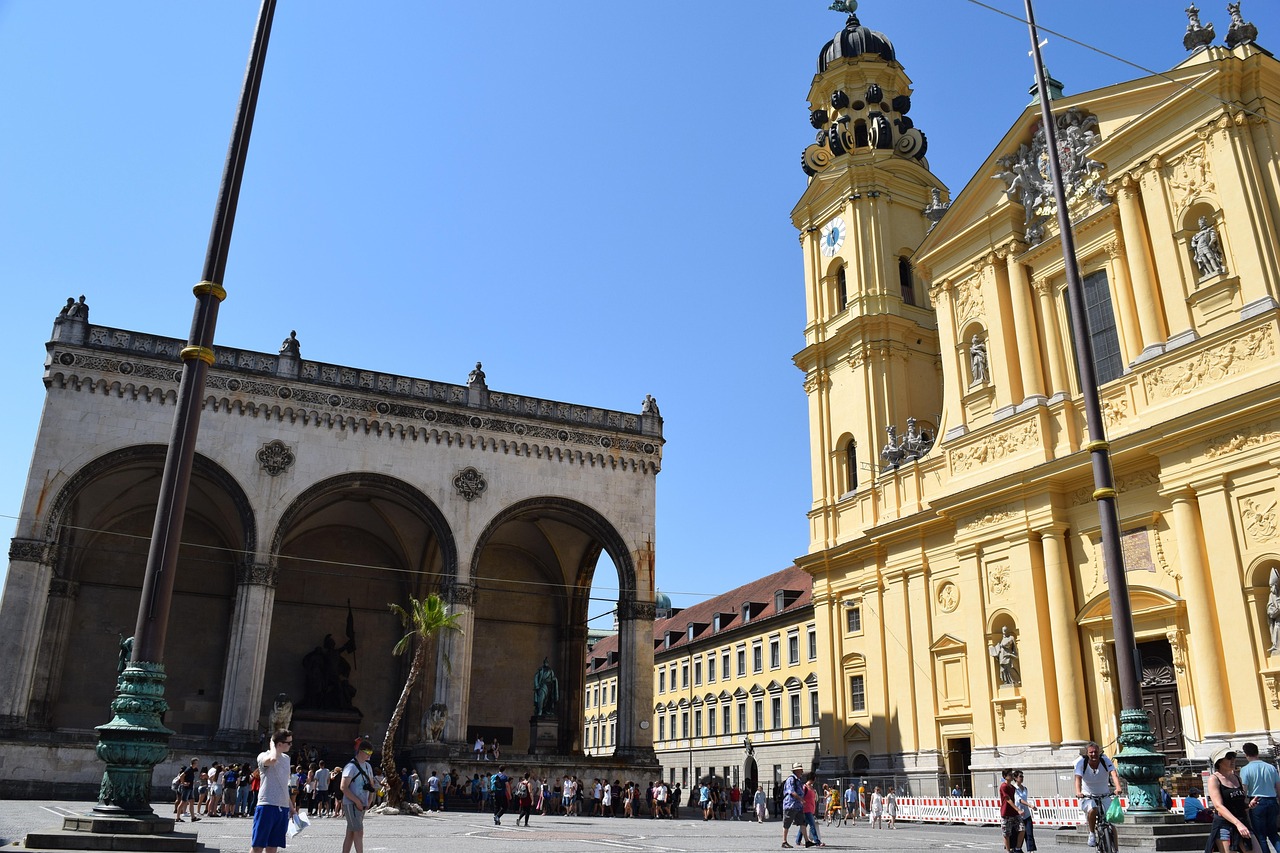
Our final stop is Odeonsplatz, one of Munich’s most impressive and historically significant squares. It was created in the early 19th century and has long been a place for parades, public events, and political gatherings. Here you can see the Feldherrnhalle, a monument built to honor Bavarian military leaders, inspired by famous Italian architecture in Florence. It stands as a symbol of Bavaria’s royal past. Odeonsplatz is also connected to a darker chapter of German history. In 1923, it was the site of Adolf Hitler’s failed Beer Hall Putsch, an early attempt by the Nazis to seize power. Later, during the Third Reich, this place was used for propaganda and ceremonial marches.
Ready to Join the Tour?
All Old Town tours are booked via Walkative. Pick the start time that works best for you — both tours follow the same route with the same stops and stories.
My Upcoming Tours
Upcoming dates I'm personally guiding. 🇬🇧 = English · 🇩🇪 = Deutsch
Loading…
On all other dates, the tour is led by my great colleagues from Walkative — equally excellent guides who'll show you the best of Munich's Old Town in their own style.